
 SUBSCRIBE
 August 1, 2025



Fresh Food For All: How We’re Shaping a Happier, Healthier Brooklyn
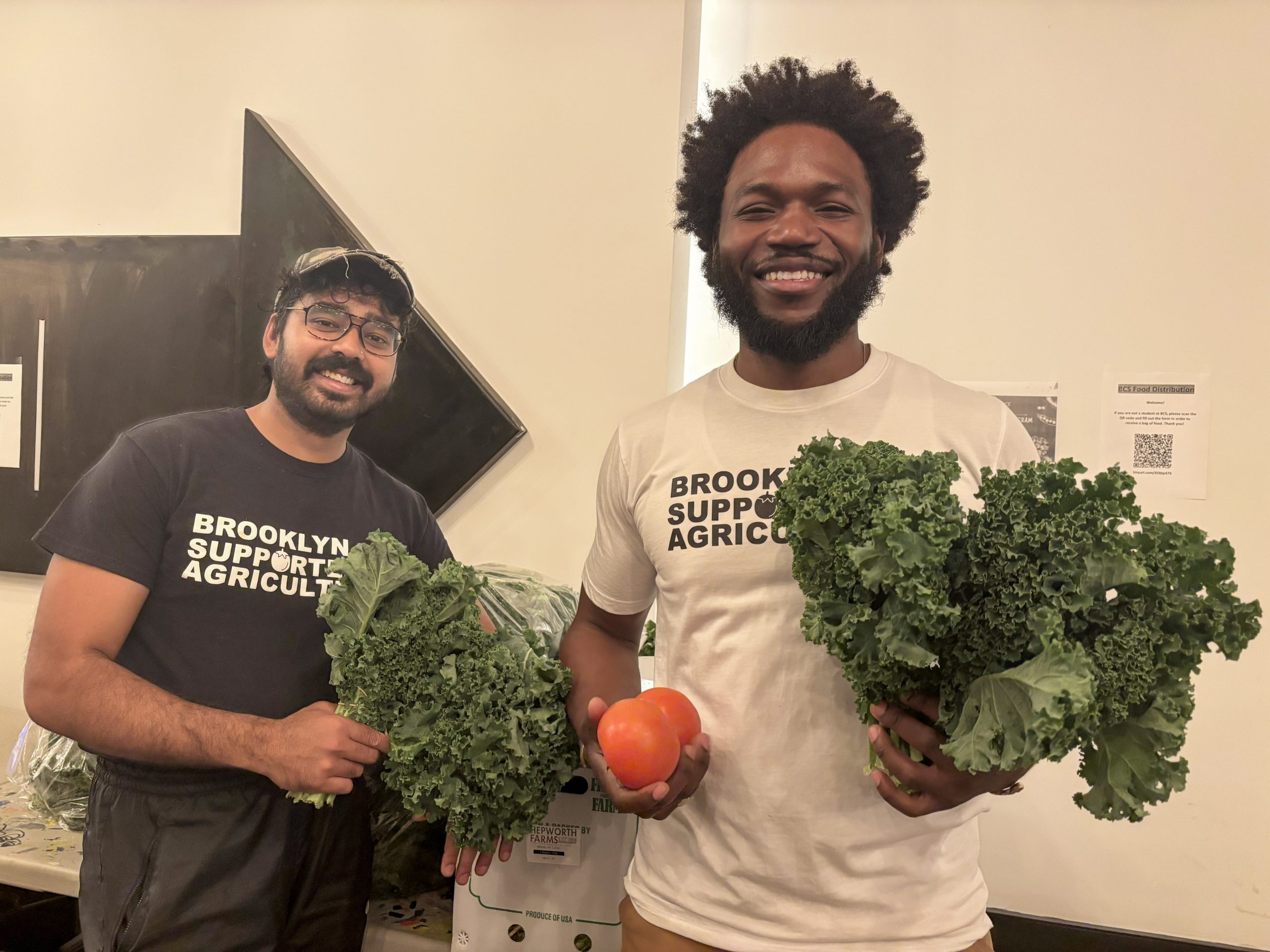
In New York City, many residents reside in “food deserts”: geographic areas where access to fresh, nutritious food is hard to come by. This can mean that a neighborhood lacks grocery stores reachable by public transportation or within walking distance of residents’ homes. In the most drastic cases, a neighborhood may lack full-service grocery stores altogether.
A 2025 report by the U.S. Department of Agriculture estimated that 18.8 million people, or 6.1 percent of the population, live in low-income census tracts that are more than one mile from the nearest grocery store. Here in Brooklyn, neighborhoods such as Bed-Stuy, Brownsville, and East New York have all long been considered food deserts.
These areas are highly affected by systemic poverty and are home to large Black and Latinx populations. A study by the Georgetown Journal on Poverty Law and Policy reports that areas known as “Black Brooklyn” experience significantly higher health risks than their wealthier, whiter counterparts, many of which are caused by their lack of healthy food.
In these neighborhoods, levels of obesity, hypertension, diabetes, infant mortality, and premature mortality are all above average. When areas lack supermarkets and farmers’ markets, they often instead have a hyperconcentration of bodegas and corner stores, which mostly sell processed food. Between 1970 and 1988, Brooklyn lost half of its large grocery stores as a result of white flight to suburbia, most of these in communities with significant minority populations.
Out of convenience, many Brooklynites rely on these places for their day-to-day meals. Because a substantial number of residents in low-income neighborhoods work multiple jobs, their local bodega may be the only place open when they return home from work. According to Stephen Ritz, author of The Power Of A Plant and founder of Green Bronx Machine, “Food is the language through which society reveals itself —who has access to what, where, when and at what price—be it high or low—determines everything.”
BCS actively works to mitigate the effects of food insecurity for Brooklynites living in food deserts. With so many programs based in and around food-insecure neighborhoods, it has long been part of our mission to expand access to fresh ingredients and, further, give community members the tools they need to prepare nutritious meals at home.
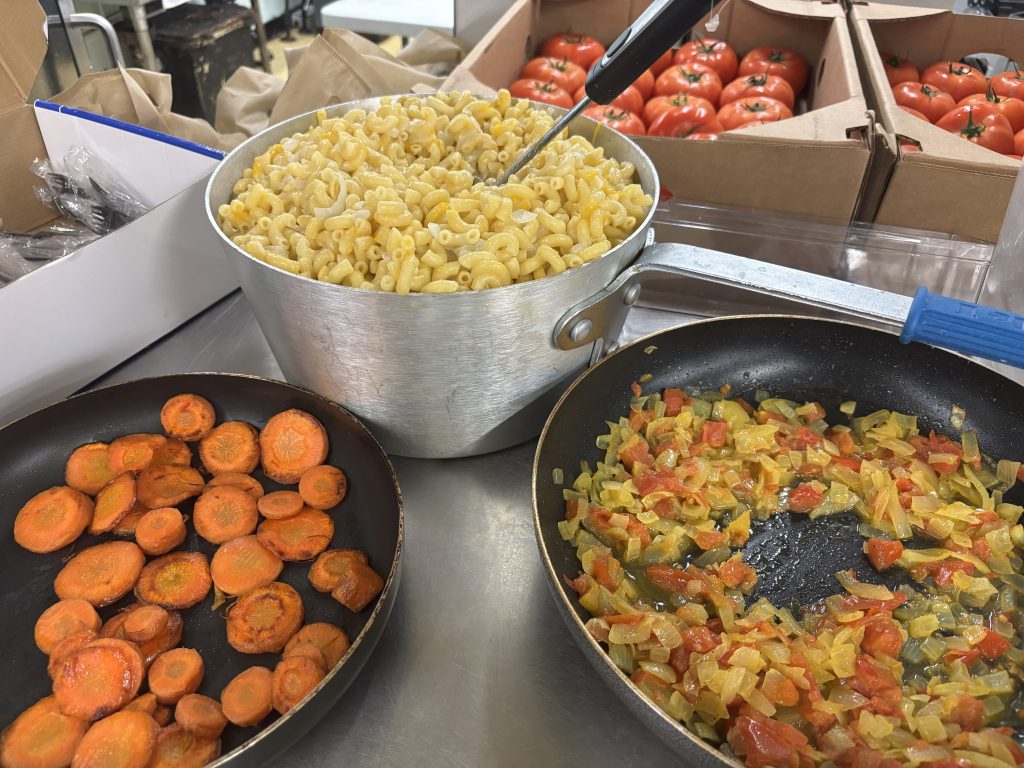
Delicious homemade dishes at a BCS food distribution event.
Cooking is a large part of our Greater Heights Clubhouse programming, allowing Clubhouse members the chance to help staff members make daily meals for the group. Also, as part of its mission to build self-sufficiency, the Clubhouse shows members where they can access fresh produce, steering them to local community fridges. The Clubhouse also partners with organizations like Brooklyn Grange. Brooklyn Grange’s rooftop farms produce over 80,000 lbs of organic vegetables every year and are distributed to Brooklynites at low or no cost through an Equitable Distribution Program.
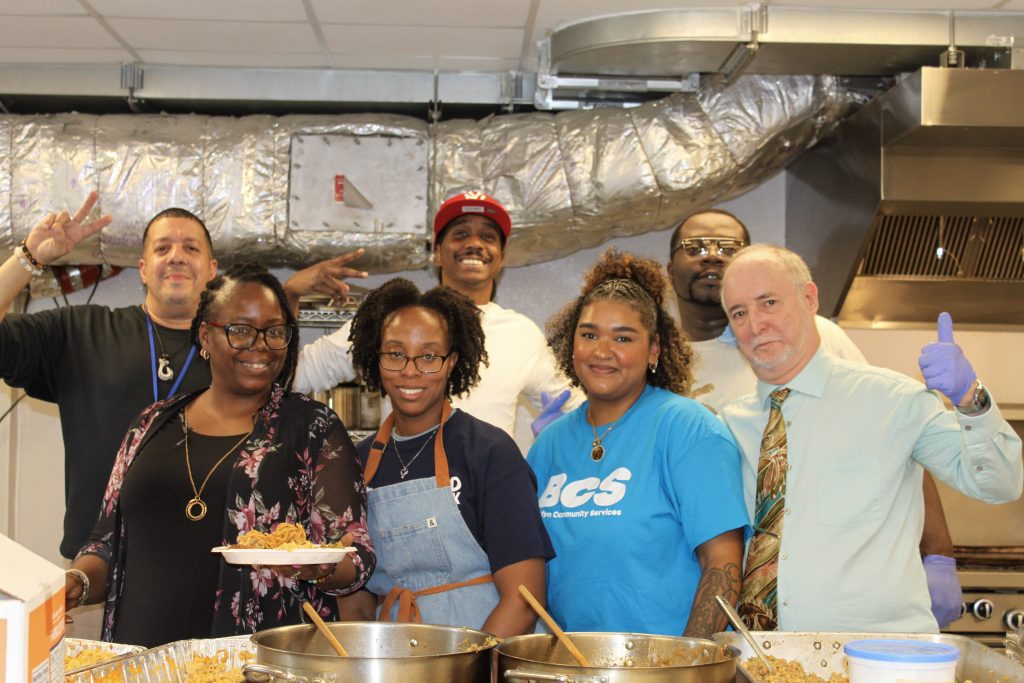
Cooking at the Clubhouse!
Further, in BCS PROS (Personalized Recovery Oriented Services), program members can help out with on-site fresh food initiatives. Laysond, a PROS participant, has learned a lot and made many friends through the program’s gardening group. “We plant fruits and vegetables outside; we have a whole flower plot outside,” he says. “I really like gardening now.”
BCS’s most recent and extensive plan to address food deserts is New York Food for New York Families, a borough-wide initiative that puts fresh, locally grown food in the hands of our Brooklyn neighbors. From our Sunset Park Education Center to our Family Enrichment Center in Coney Island, we ensure families have all the food they need.
Angie Chait, Food Coordinator for BCS’s Family Development Department, says that it has been gratifying to see how much the Food for Families program helps community members of all ages, from elementary school students to senior citizens at assisted living centers.
“At some distributions (where kitchens are available), members cook simultaneously with our food distribution, and all are welcome to sit for a meal together, which fosters a sense of kinship and community,” Chait says. “We hear many stories from families who can’t afford food for the week and are grateful for the bag of produce to get by.”
Also, our new youth culinary clubs hold cooking demonstrations for community members and share delicious, culture-specific recipes for the neighborhoods we serve. Individuals not only receive ingredients but are equipped with the tools they need to make easy, nutritious meals for their families. Food distribution days are tailored to the unique needs of each neighborhood and supported by local partners and volunteers.
With these Brooklyn-based programs, BCS aims to create Food Equity: equal access to food that is affordable, sustainable, nutritious, and culturally-informed. As Nancy E. Roman, the President and CEO of Partnership for a Healthier America, puts it, “The United States has become a place where too many people can’t find healthy, affordable food. We urgently need to come together around a shared vision for long-term, sustainable change.”
We at BCS are proud to be a part of this mission. We may be unable to fully remedy the systemic roots of Brooklyn’s food deserts, but there are still many ways for us to make a huge difference in Brooklynites’ day-to-day lives.
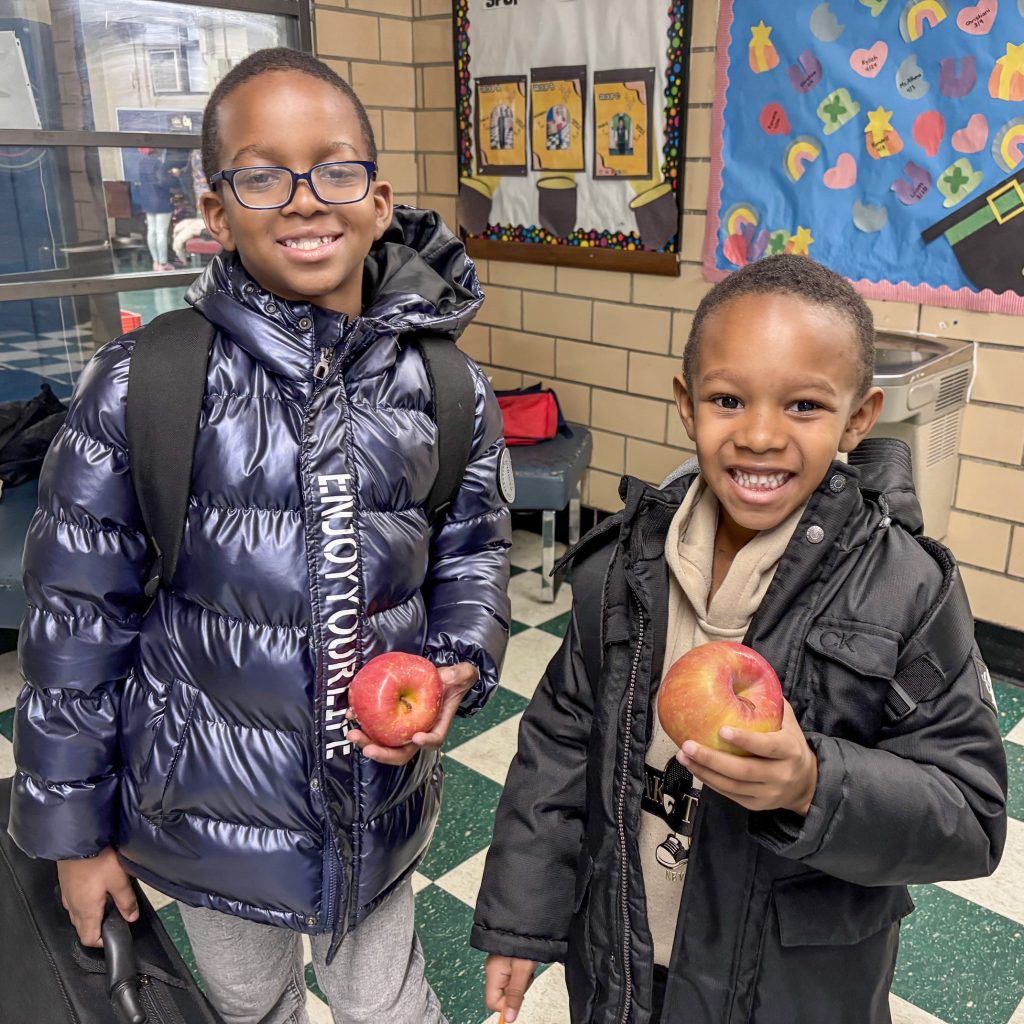
Young Brooklynites try some fresh apples from NY Food for NY Families.
“Many kids mention they’ve never tried certain vegetables we bring and are excited to finally taste them—mushrooms for example!” Chait says of the Food for Families initiative. “Most kids love fruit and can’t wait to get an apple or a peach. On a recent day, the kids decided to take an ‘apple break’ together and sat down to share their apples. It was very sweet.”
Even small moments like these are a sign of progress for what Brooklyn can become. When we work together in our communities, we inspire each other to fight for more equitable and extensive fresh food access.
Top Viewed Posts
Youth Art Programs
Program Spotlight: Day Habilitation
BCS Volunteers Spring into Action for Brooklyn
Recent News

Participant Spotlight: Ann Salmon, PROS
July 16, 2025
Read More

BCS partners with communities to build a Brooklyn where all residents have access to the education, employment, housing, and other essential resources they need to thrive. We recognize the dignity, strengths, and talents of our neighbors, and have worked since 1866 to support resilient communities.
Brooklyn Community Services
151 Lawrence Street, Floor 4
Brooklyn, NY 11201
Connect with us







Copyright © 2026 All Rights Reserved. Designed by FBC.